Yesterday was my daughter’s birthday party, and I couldn’t even have a bite of her cake. Today we placed our first grocery order since everything started getting worse, and I sat at home scrolling through pictures of food trying to find anything that didn’t make me physically sick just looking at it. No fats. No dairy. Nothing heavy or rich. Bland, small bites if I can manage them. Pretzels. Saltines that are still sitting unopened. Things chosen entirely by how unlikely they are to hurt me rather than whether I actually want to eat them.
People say, “Just eat. Just drink. You know what happens if you don’t.”
I know. Of course I know.
Do people really think I would choose this? That I wouldn’t give just about anything right now to sit down with a plate of food, eat until I’m full, drink an entire glass of water without thinking about it and move on with my day? I am hungry. I want food. What I don’t want is the pain that comes with it. I am painfully aware that my body needs food and water, but knowing that doesn’t make my body tolerate either one any better.
There are such ordinary things hidden inside being sick that nobody really sees. A birthday cake you don’t touch. Groceries chosen by what might hurt the least instead of what sounds good or more importantly, what’s healthy for you. Water beside you that you keep trying to sip because you know you need it, even when drinking hurts too. Wondering whether you have enough energy to take a shower, or looking at an entire workday and quietly wondering how you’re supposed to make your body last through it.
From the outside, I can still look like me. That has become one of the most frustrating and defeating parts of all of this, and if I’m being completely vulnerable, one of the saddest. My body can be struggling this much internally while giving almost nothing away to the people looking at me.
Then there is the other advice I hear constantly. Rest. If only lying down automatically meant resting.
I spend more time on the couch or in bed than I ever have, but there is very little about it that feels restorative. My body is lying still while my mind keeps tallying everything I am not doing. The house. The things that need to be cleaned. The projects I started or wanted to start. The things other people have had to pick up because I haven’t been able to. Gardening barely existed for me this year. My projects have completely stopped. Things that normally make me feel creative, capable and connected to myself are sitting untouched while I lie there supposedly “resting.” And with every unfinished thing comes guilt.
I already carry more guilt than I should for the ways my health affects the people I love. Now there is another layer because I feel useless in my own home. I can see everything that needs to be done. I still care that it needs to be done. I still want to be the person who gets up and does it. Wanting to and physically having the energy to are no longer the same thing.
I do still go out. I go to work. I make the appointment. I show up for the thing that cannot be skipped. I can get dressed, put myself together, walk through a door and look enough like myself that someone could spend an hour with me and have absolutely no idea what it took to get there.
That hour is the part people see.
They don’t see what it cost me to shower beforehand or what I didn’t do so I could do that one thing. They don’t see me come home and collapse onto the couch or climb into bed because whatever energy I borrowed to function outside of my house has to be paid back tenfold when I return. Being seen working, leaving the house, laughing, taking a picture or doing something that looks remotely normal can somehow become evidence that I must be doing better, or that I couldn’t possibly be as sick as I say I am.
I wish that were how illness worked.
I wish being able to push my body through something meant my body could do it without consequence. I wish looking healthy meant everything inside of me was healthy too. I don’t want my entire identity to become being sick. I still want to work. I still want to show up for my children. I still want to laugh, travel, garden, create things and have pieces of my life that have absolutely nothing to do with doctors, blood pressure, pain or what I managed to eat that day. The fact that I continue trying to hold onto those pieces of myself shouldn’t be used as proof that I am not struggling.
If anything, lately they are proof of just how hard I am still fighting.
By Thursday, though, fighting at home wasn’t working anymore. I had made it through work all week while barely eating, drinking less and less and trying to function through pain and exhaustion that had already taken over most of the hours I wasn’t there. Even sleep, the one place my body should have been able to disappear for a while and recover, wasn’t giving me any relief. I had been stuck in a hyperinsomnia stage for days, sleeping only a few broken hours at a time. I was spending most of my time lying down because I didn’t have the energy to do much else, yet I wasn’t actually resting. My body was exhausted and my brain wouldn’t let it sleep.
My blood pressure had fallen as low as 70/40 at my primary care doctor’s office earlier in the week, then 70/54 when they checked it again. When it gets low enough, I can feel it cognitively. My thoughts aren’t as clear, my body feels heavier and everything takes more effort. By Thursday I hadn’t eaten in two days, and drinking was becoming harder because it hurt when I did, while not drinking came with pain and consequences of its own.
My primary care doctor had been hopeful that I could go to U of M and be admitted for a few days for continuous fluids and IV nutrition, giving my body some support while we tried to figure out why something as basic and necessary as eating and drinking had become this difficult.
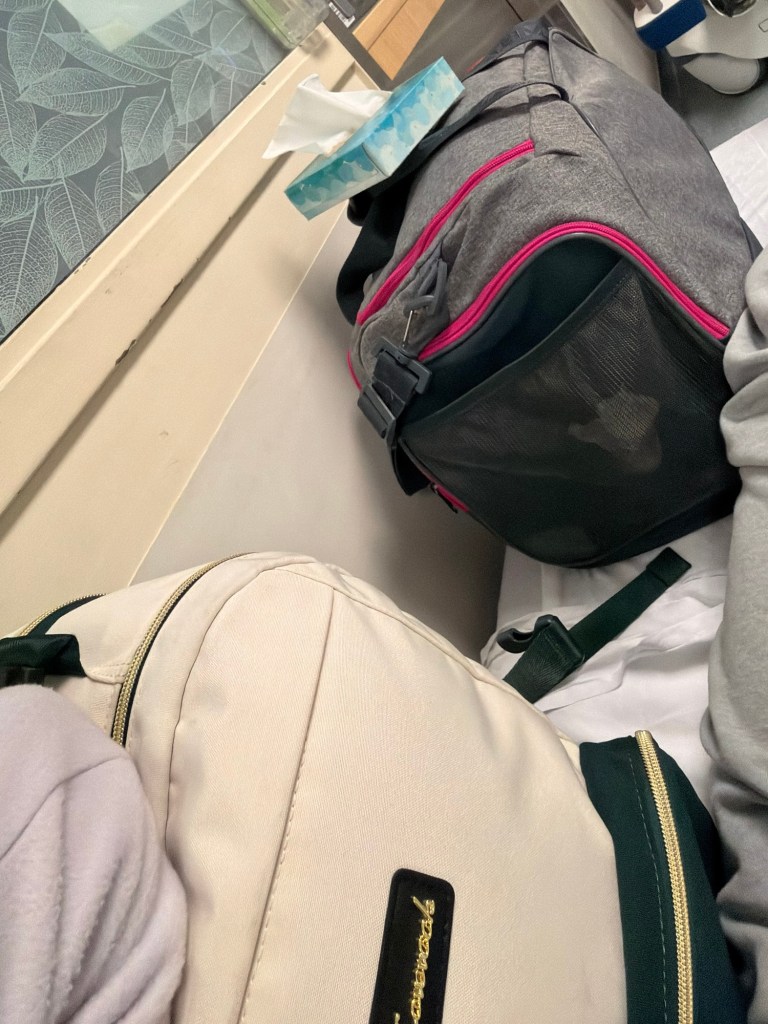
Thursday after work, I went home and packed two bags.
I packed them believing there was a very real possibility I wouldn’t be coming home that night. I packed the particular things I need because sensory issues don’t disappear when I’m sick. If anything, when I’m already hurting, exhausted and overwhelmed, those little familiar things matter even more. What touches my skin, what I sleep in, the things I use every day, the small pieces of home that make an unfamiliar medical environment a little easier for my nervous system to tolerate. I knew exactly why I needed what I had packed.
That didn’t stop me from feeling embarrassed the second I walked into the U of M emergency department carrying two bags. I felt like I looked ridiculous, walking into an emergency room with luggage like I was checking into a hotel. I hadn’t even made it past the waiting room and I was already worried about taking up too much space.
Then I looked around.
There had to be close to eighty people waiting. The sheer volume of people was overwhelming before my brain even had a chance to separate all the individual pieces of it. Bodies everywhere, conversations overlapping, movement in every direction, phones, voices, people coming and going, nowhere quiet to look and nowhere for my nervous system to settle. I had worked all week on almost no food, very little fluid and only a few broken hours of sleep at a time. I was hurting, exhausted and emotionally hanging by a thread, standing there holding two bags that suddenly made me want to disappear while every bit of noise and movement seemed to hit me at once.
I asked the man at the desk if that was really how many people were waiting. It was.
The wait hovered around ten hours for most of that night, and standing there looking at that room, something in me gave way. I had an anxiety attack before I had even made it through the beginning of the process.
When they took my vitals, my blood pressure was higher than I had ever seen it. After days of watching numbers frighteningly low, my body chose that exact moment, flooded with anxiety and sensory overload, to give them a number that looked nothing like the blood pressures that had helped bring me there.
That number became my baseline for the visit.
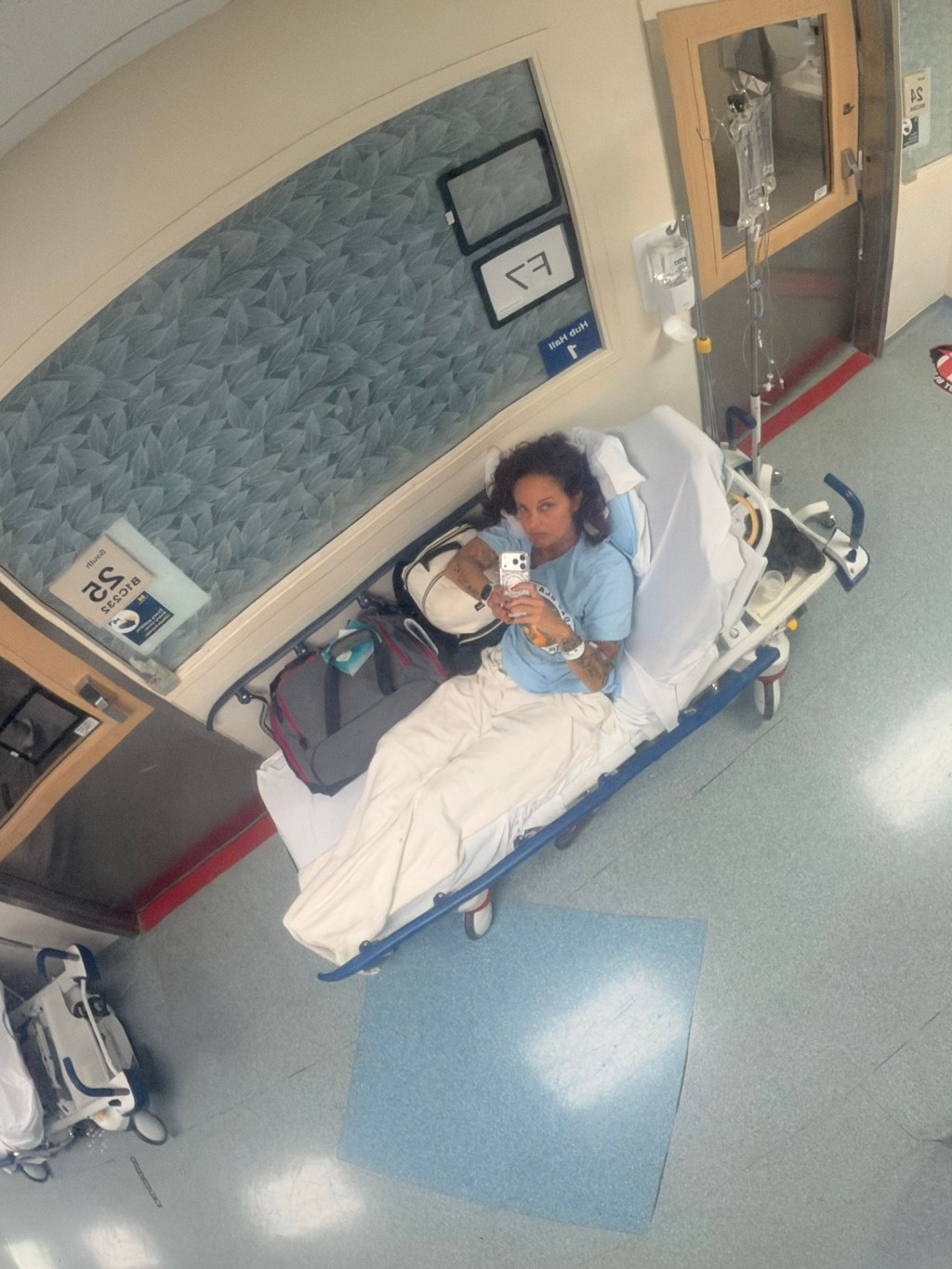
Eventually I ended up on a stretcher in the hallway, where I would spend most of the next fourteen and a half hours. My two bags stayed beside me, packed for the admission I had allowed myself to believe might finally give my body a few days where keeping it going wasn’t entirely my responsibility.
The first resident who came to see me gave me a little hope that I had made the right decision by coming. She listened while I explained what had been happening, the pain, the blood pressure, the exhaustion and what my primary care doctor had hoped an admission could provide. She agreed that I needed to be admitted and told me she was going to push for it.
Then she was called away for a trauma. Then another. Then another.
I understood why she had to go. There were people coming through those doors who needed someone immediately, and I would never want my needs placed above someone fighting for their life. Understanding that didn’t make my body need help any less. It was around three hours before I received fluids at all.
When the attending physician came to see me, he told me that my labs looked surprisingly good for someone who wasn’t eating or drinking and that he didn’t see an emergency that required admission.
I knew what the numbers said. What I couldn’t seem to make him understand was everything they didn’t say.
I had managed maybe eight ounces of water that day. Since July 21, nearly everything I had been able to drink had an electrolyte packet mixed into it because I knew my intake was so low and I was trying to give my body whatever I could. I wasn’t asking him to ignore reassuring numbers. I was trying to explain that I had been actively doing everything I could to keep myself from becoming more depleted while my ability to eat and drink continued to disappear. The numbers weren’t living my day.
They couldn’t feel what happened when I tried to eat or drink. They couldn’t show the effort it was taking just to continue functioning or the difference I could feel when my blood pressure fell too low. I was lying right there trying to tell him those things.
He told me this had been happening long enough that I needed a specialist and specialized testing. I was too medically complex for the emergency department to figure out.
I didn’t disagree with him. I am medically complex. I have lived in this body long enough to know there wasn’t going to be one easy test that suddenly tied everything together. I wasn’t asking an emergency physician to solve years of medical history in one night.
What I couldn’t understand was how being too medically complex for them to help became a reason to send me home when the very complexity he was pointing to was part of what made going home feel unsafe.
My primary care doctor had hoped for a few days of continuous fluids and IV nutrition because I wasn’t managing either adequately on my own anymore. When I told him that, he said, “You don’t come into the ER for that.”
I know an emergency room isn’t somewhere you simply walk into and request an admission for IV nutrition. But I hadn’t packed two bags and driven to U of M because I wanted a hospital bed. I was there because I had reached the point where I couldn’t reliably give my body the basic things it needed to keep functioning. My primary care doctor couldn’t directly admit me there. I couldn’t put myself in front of GI. The ER was the door I had been told to walk through.
The doctor explained that GI would need to investigate the duct further, likely with a specialized scope to look more closely at my pancreas and hopefully determine what was causing the dilation. If that didn’t provide an answer, I might eventually need another specialist, possibly hepatology, oncology or somewhere else depending on what they found and what still needed to be ruled out.
Before discharging me, the attending examined my abdomen. He pressed in different places until his hand reached the area over my pancreas.
I broke.
The pain was immediate enough that I started sobbing. There wasn’t time to prepare myself for it or put the composed version of me back together.
And there, in the quiet of my own room, I didn’t have to make any of it look manageable. I didn’t have to look okay. I didn’t have to explain my medical history again. I didn’t have to find the right words to convince someone that what was happening inside my body mattered.
Before leaving for Washington, my labs had been improving and we believed I was coming out of another pancreatic flare. Nothing had been treated away. We thought my pancreas was settling down, but I never really returned to feeling well. I had spent most of the time since June 27 on the couch or in bed whenever I wasn’t doing something that absolutely had to be done. Pain, nausea and exhaustion had become so constant that there wasn’t a clear enough line anymore for me to recognize when one flare ended and another began.
My history with pancreatitis has never fit perfectly into a laboratory box either. One of the standard criteria doctors can use in diagnosing acute pancreatitis is pancreatic enzymes at least three times the upper limit of normal, along with the larger picture of characteristic pain and imaging. My enzymes have never reached those dramatic levels, yet I have still been hospitalized two or three times for pancreatitis. Mine has been called idiopathic because, despite looking for one, nobody has been able to hand me a clear cause or trigger.
Another hit from a worn body without an explanation for why. Because of where I reacted during the abdominal exam and my history, he ordered a CT. That CT found something. My pancreatic duct was dilated.
There was a strange mix of emotions in hearing that. Part of me felt relief because something was finally visible. I hadn’t wanted another thing to be wrong with me, but after weeks of feeling like my body was screaming while tests and numbers whispered, there it was. Something tangible that said this pain wasn’t something I was imagining, exaggerating or failing to handle well enough. Then almost immediately, the relief disappeared because nobody could tell me why it was dilated.
Hearing the word oncology in a conversation about my pancreas was enough to send my mind somewhere I didn’t want it to go, but he reassured me that he did not believe this was cancer. The CT showed no masses. I held tightly to that reassurance rather than letting one possible future referral become something he wasn’t telling me.
The truth was simply that we didn’t know. Then he told me GI was taking around eight months to get people in.
Eight months.
I remember telling him, “I’ll be dead in eight months if this continues and you don’t see this as emergent?”
I wasn’t trying to be dramatic, and I wasn’t claiming I was dying on that stretcher. It was desperation. I couldn’t imagine another week living this way, much less eight months. Waiting for specialized care requires a body stable enough to survive the waiting, and I was trying desperately to make someone understand that mine was becoming less stable by the day.
They still prepared to discharge me.
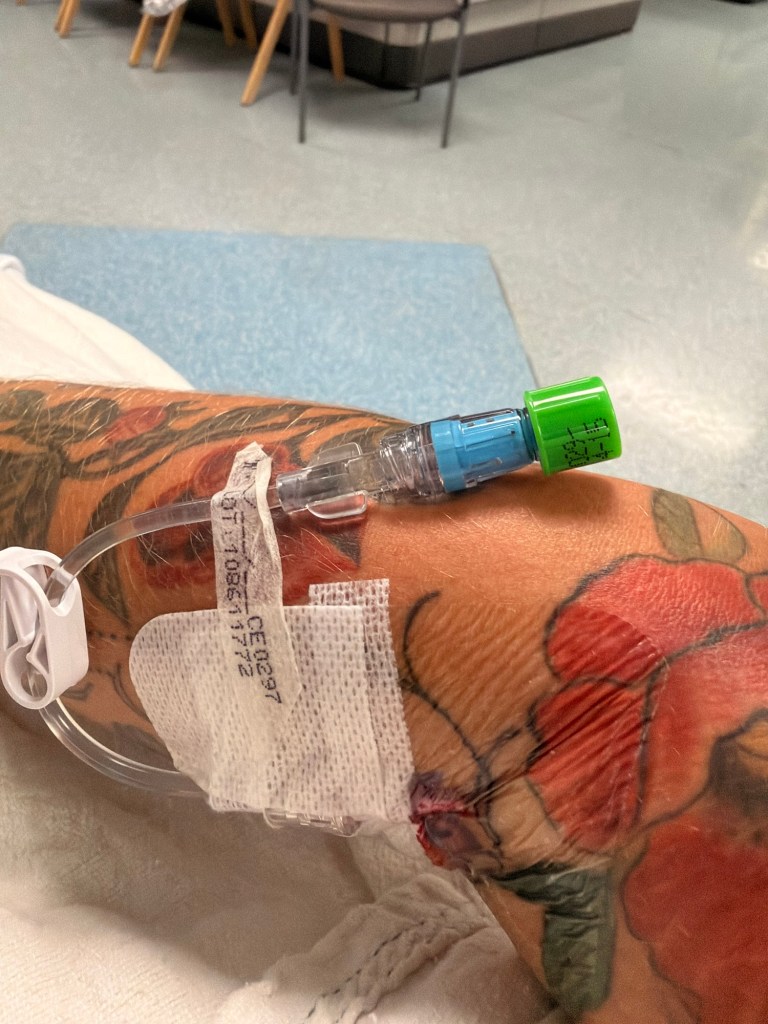
My nurse came to remove my IV and checked my blood pressure first. It was dropping. She checked it on another machine, then another, then another before finally taking it manually. It was still dropping. She looked at me and said, “I’m not taking your IV out.”
I needed that moment more than I realized. Not because I wanted another reason to stay in a hospital, but because somebody else was finally witnessing what I had been trying so hard to explain. My body could look stable for a snapshot and still struggle to maintain that stability on its own.
She called the doctor and the discharge was removed. She wondered if I was so dehydrated that my body had absorbed the fluids I received earlier and, after going hours without more, was simply starting to fall back toward the place it had been before.
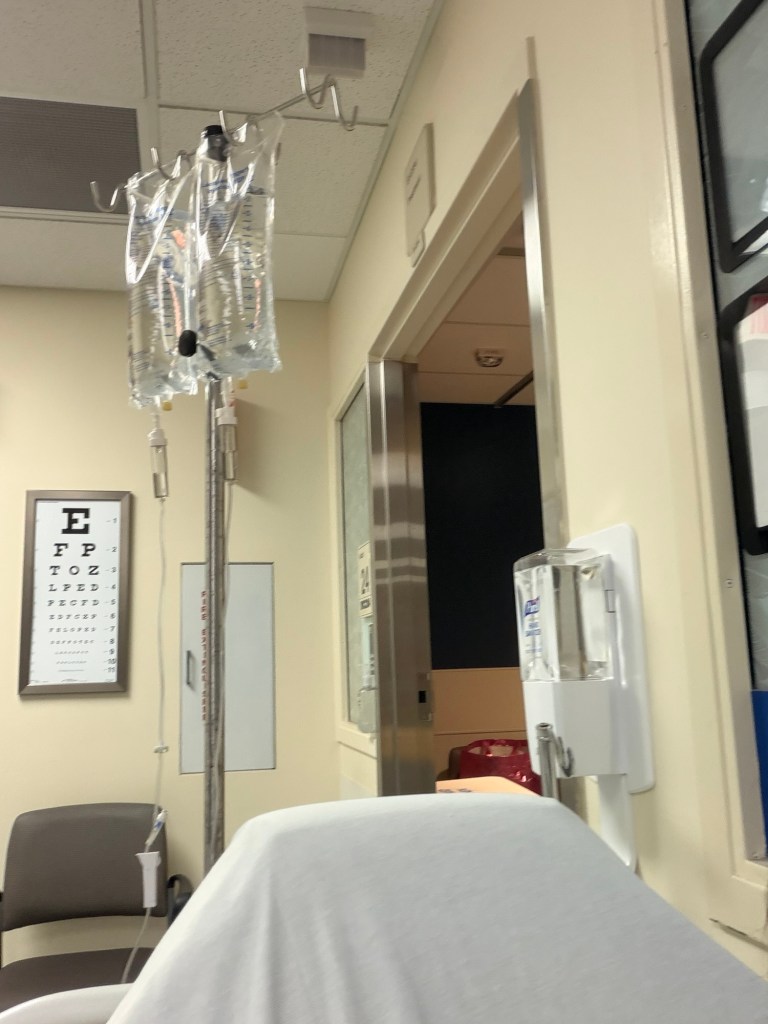
Another resident came to see me and told me they were going to keep me for observation and give me more fluids. The relief that washed over me wasn’t because I suddenly thought everything was going to be okay. Another bag of fluid wasn’t going to explain my pancreas. I was relieved because for a little while I thought I could stop fighting to convince someone to help me. I thought I could close my eyes on that hallway stretcher and allow my body to be supported while I had absolutely nothing left to give it myself.
Five and a half hours later, I still hadn’t received the fluids. Then the plan changed again. I was too complex. I needed GI. I needed outpatient follow-up. They were discharging me.
There is a particular kind of defeat in being told that you are too complicated for the place you were told to go, while simultaneously not being sick enough for that place to help you reach the specialists they say you need.
After fourteen and a half hours, I picked up the same two bags I had carried through those doors the evening before and brought them home. Most of them are still packed.
I didn’t have the energy to put everything away. I went back to bed.
I was exhausted, but underneath the exhaustion I was angry. I had spent fourteen and a half hours asking for help and left feeling discounted by the very things that make my health difficult to manage. Being medically complex seemed to become a reason they couldn’t help me instead of a reason I might need more help. I had gone there because I knew I was reaching the point where I couldn’t keep supporting my body on my own, and somehow I came home carrying that responsibility all over again.
There is something incredibly defeating about asking for help before your body reaches a complete crisis and feeling like you have to reach one before the severity becomes undeniable. I wasn’t waiting for my body to completely fall apart before doing something. I was trying to prevent it from getting there.
I know my body. I know the difference between my normal version of struggling and when something has shifted beyond what I can manage. It took a lot for me to admit that I had reached that point. I had packed those bags believing I was finally handing some of that responsibility over for a few days, only to carry them home mostly untouched.
I am grateful the CT showed no mass, and I am grateful that we finally have something tangible to investigate with the dilated pancreatic duct. I am especially grateful for the nurse who stopped my discharge when she saw what my blood pressure was doing.
But gratitude doesn’t erase anger, and I don’t want to make this part prettier than it was.
I felt dismissed. I felt defeated. I was scared of what happened next, and I was angry that I had somehow ended up right back where I started, except now I knew there was something happening inside my pancreas that still needed an explanation. So I climbed into bed.
The bags stayed packed. The house could wait. Everything could wait because there wasn’t enough of me left to give any of it. Even then, sleep didn’t give me an escape. For days it had been coming in only a few broken hours at a time, leaving me in the strange position of spending most of my time lying down while never actually feeling rested.
I could just be angry.
I have spent years learning how to make illness look smaller than it feels because I refuse to let it take every visible piece of my life. I have learned how to show up hurting, function exhausted and hold onto pieces of myself even when my body makes doing so incredibly difficult.
I never imagined getting so good at surviving visibly well could make it harder to be believed when I finally said I couldn’t do it by myself.
Friday I still had somewhere I needed to be. My girls had a 1:00 appointment, so I set an alarm and got out of bed around eleven. I barely made the hour drive there, and the drive home was even harder. When I finally walked through the door, I undressed and went straight back to bed.
Saturday morning I took a shower, and by the time I finished, I could hardly hold myself upright.
It sounds ridiculous to give a shower that much significance, but that is where my body is right now. I had to lie down afterward because we had plans to see a play at the Croswell with Mariah Mae, and as little as I get to see her, I couldn’t willingly give up that time with her.
So I rested for a little while, pulled from whatever reserve I could find and went. Afterward, I drove to my littlest one’s birthday party.
This is what I mean when I say that seeing me somewhere doesn’t tell you what I have left. I didn’t suddenly have energy because something mattered enough to me. I was empty before I left. I went anyway.
Life doesn’t stop when your body does. Your children still have appointments. Your daughter is still sitting beside you at a play and you still want every minute you can get with her. Birthdays still happen. School is about to begin. Work is waiting Monday morning. There are things I have to do and things I love too much to willingly surrender, and somewhere between those two are all the moments I keep forcing my body to give me even when it has made it painfully clear there isn’t much left to give.
I can actually feel the reserve disappearing.
It isn’t ordinary tiredness. I can feel the exhaustion deepen while I’m still doing the thing I’m asking my body to do. My thoughts become harder to hold onto. My brain feels slower. For the last two days even my vision has been blurry. There is an awareness inside me that I am pulling energy from somewhere that doesn’t have anything left to offer, and I keep doing it because the alternative is watching my life continue without me.
When I got home Saturday, I changed my clothes and climbed straight back into bed.
Today I ate one pretzel. And I am hungry. God, I am hungry.
Hunger isn’t the problem. I want food. I want to eat something without negotiating with myself first. But I also know the pain that follows, and today the pancreatic pain is already worse. At some point hunger and pain start negotiating with each other, and right now I don’t have enough energy left to volunteer for more pain just because my body is begging for food. I’ve managed maybe sixteen ounces of water and electrolytes today.
It is 1:33 in the morning as I write this, and my alarm is set for 6:20 for church. Normally, I would already be telling myself I’ll get up.
Right now I genuinely don’t know if I can.
That scares me more than I want it to because church isn’t the only thing waiting on the other side of that alarm. Work is there too. School is about to start, and with it comes everything I know needs me. In the back of my mind there is already that familiar voice saying I cannot miss work, as though knowing I need to be there might somehow create enough energy to get me through the door.
For the first time, another thought has started finding its way in too.
Disability.
I don’t know what that looks like for me. I don’t know if it is where any of this eventually leads, and there is a part of me that almost recoils from writing the word because it feels too much like surrendering a life I have fought incredibly hard to keep. Work is more than a paycheck. Being capable matters to me. Showing up matters to me. Independence matters to me. There are pieces of myself tangled into all of those things, and I am not ready to willingly hand them over because my body has decided to make living this life harder.
But lately I have found myself wondering about it. Not because I want to stop working.
Because I don’t know how long I can keep asking my body to do this. That is a terrifying distinction.
There is the life I am desperately trying to hold onto, and then there is this body that has carried me through more than I ever thought it could. I have asked it to recover, adapt, compensate and keep moving more times than I can count. Even now, when it is giving me every indication that it needs something I don’t know how to give it, I am still asking it for one more workday. One more appointment. One more drive. One more important moment with someone I love.
I don’t want to give any of those things up. I also don’t know which one of us gives out first. Me, or the body I keep asking to carry me.
But I am a fighter. I am resilient. I’ll bounce back, I always do. Right now though, it doesn’t feel so confident.


Express Yourself!