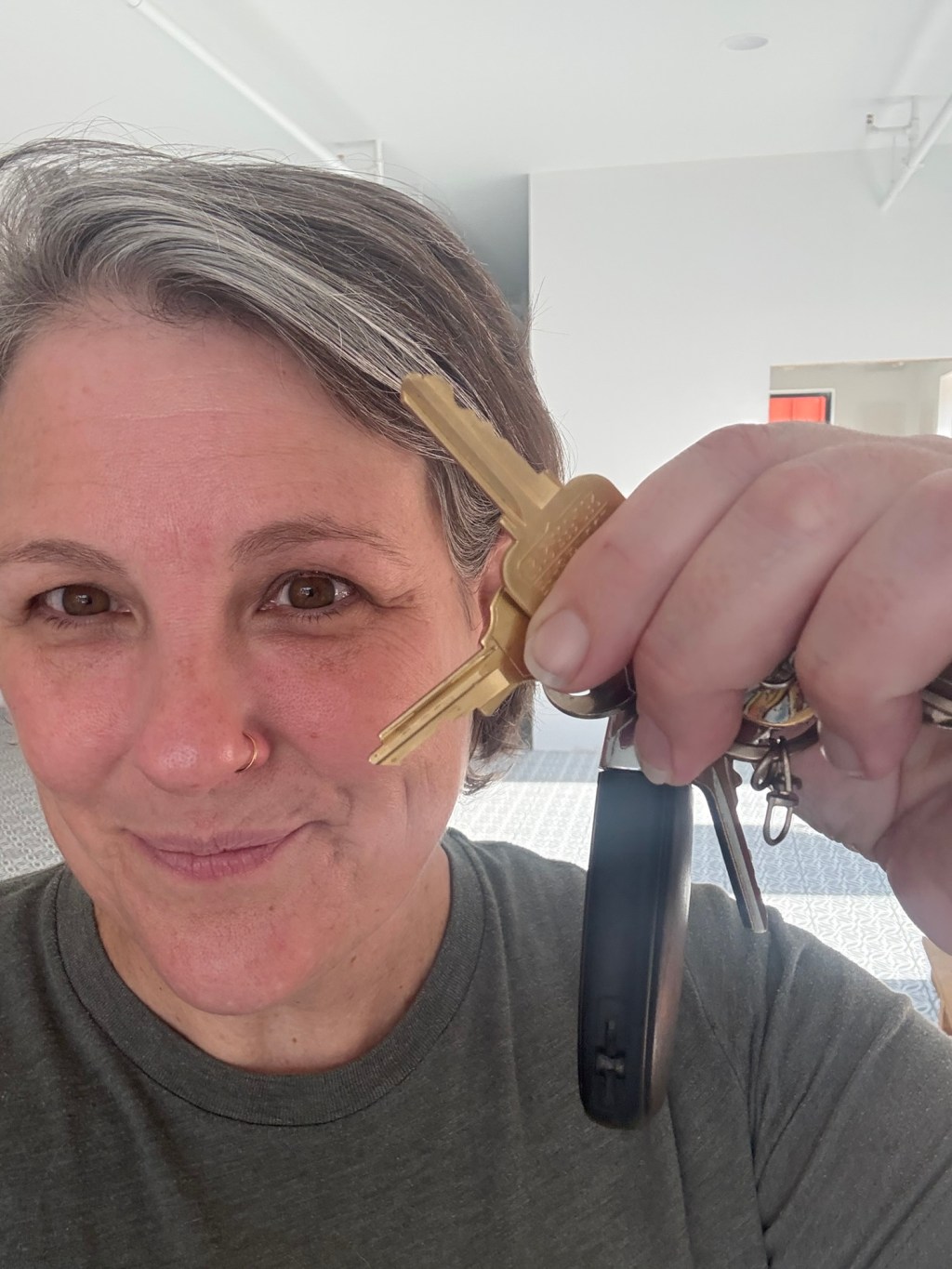
Meet Gretchen, the woman behind Brooklyn’s newest dream
The first time Gretchen walked into the space that would eventually become Fetch Market, she hated it. There was gross indoor-outdoor carpet, terrible front windows, and she couldn’t see past any of it. She wanted the smaller space. Looking at it now, she knows exactly how wrong she was. “Way wrong,” according to her. Now she can’t imagine being anywhere other than that corner.
I love that this is where the story of Fetch starts because it’s so Gretchen. She isn’t going to rewrite something to make herself look better now. If she hated it, she’ll tell you she hated it. If she was wrong, she’ll tell you that too. She might even laugh while she does it.
But before I tell you how Gretchen ended up standing inside that building, looking at a future she had been working toward for years, you need to know the woman who walked through the door.
I’ve known Gretchen for over fifteen years. Our kids grew up together. We were doing spelling tests with them when they were little, and somehow those little kids are in college now. That’s a lot of years to know someone and a lot of life to happen in between.
Gretchen and I have plenty of stories from those years. One of my favorites is a girls trip to Grand Rapids. We went to Z’s, ordered a completely unreasonable amount of food, and then went to see Swan Lake. I still have the pictures, including a few that are probably better left unexplained. She recently reminded me that she once “literally quit a job because of” me before quickly adding, “Well, kind of.” I know the story. I still feel a little bad about it. It also still makes me laugh.
We’ve had years of laughing, raising kids, watching life change, and just being friends. We also had a small stretch when we weren’t close. I honestly couldn’t tell you how we found our way back to each other. We just did. Gretchen has a fierce, magnetic pull about her that’s hard to stay away from.
She’s proud of her RBF. She’s authentic, fierce, stubborn, and vulnerable, sometimes all at once. She knows she makes some people uncomfortable and recently told me she’s “oddly OK with it. Perhaps they need it.” That made me laugh because there really isn’t a better Gretchen answer.
That’s the Gretchen people might notice first. The Gretchen I’ve gotten to know over all these years is also deeply caring. She’s a fiercely loving mom. She’s funny as hell. She’s loyal. She’s complicated. She has high expectations of herself and the people around her. She can absolutely be a pain in the ass, and I mean that with love. She’s also one of those people who feels things deeply, even when that isn’t the part she’s showing you.
More than anything, she’s a good human. I don’t say that simply because she’s my friend. I’ve had over fifteen years to watch her live.
Fetch didn’t create this version of Gretchen. Fetch came from her. And to really understand what she’s building now, you have to understand some of what it took for her to get here.
There were parts of that story even I didn’t know.
Long before Fetch, professional kitchens and business plans, Gretchen was a bubbly, busy, curious little girl with what she describes as some serious “tomboy vibes.” She was the kind of kid who hunted turtles and spent as much time as she could outside. Some of the childhood memories she holds closest happened at her grandparents’ lake house in Indiana, where there was waterskiing, tubing, turtle hunting and the kind of freedom kids find around a lake. She also remembers military parades and the Black Horse Troop.
Then there were Saturday mornings. Gretchen would watch cooking shows on PBS, including Ming Tsai, America’s Test Kitchen and Two Fat Ladies. Somewhere in those years, the little tomboy hunting turtles was also in the kitchen making pot roast for her family. She isn’t even sure she would say she always loved cooking, but looking back, food was already quietly becoming part of her story.
There was another part of her childhood that almost nobody knew. Gretchen grew up completely alone. There were people around her, but she didn’t have the safety and support a child should have. When I asked if there was someone who made her feel safe growing up, she couldn’t give me a name. “I don’t really remember anyone being safe. Certainly not an adult I could go to if I was in trouble.”
That followed her into adulthood. Gretchen grew up in an abusive home and later spent years in an abusive marriage. She didn’t have a family safety net behind her when things went wrong. Being completely alone through so much of her life has been one of the hardest things she has ever had to do.
Eventually, she lost herself completely.
When I asked what she would tell that bubbly little tomboy if she could sit beside her today, she said, “It will all turn out okay. You will lose yourself completely; it’s going to be painful and lonely, but you will rebuild stronger.”
Finding her way back wasn’t one big moment where everything suddenly became okay. Her kids helped. Therapy helped. Cooking helped. She had to figure out who she was, how she had become that woman, what she wanted and who she didn’t want to be anymore. There were several times she stopped believing in herself, mostly, she says, because of outside forces.
“Since reclaiming my life, I have been running full force towards my dreams.”
Full force is a pretty accurate description of the Gretchen I know today.
Her life looks very different now. She has her kids, wonderful friends, people she loves and people who love her right back. When I asked what brings her peace, she named traveling, her kids, her friends, and belly laughing. Ask what makes her laugh the hardest, and you’ll get an answer that sounds exactly like her: “My friends and my bullshit and shenanigans.”
When I asked why supporting other people and building community matters so much to her, her answer was simple. “Comes from feeling alone. I want to use my platform (what little I have) to lift others. I hope to be encouraging and be an example of how to treat others.”
Food became part of finding herself too. When I asked what feeding people means to her, she said, “It means I care, but food is my creative media.” For all the food she’s made and all the years she’s spent becoming a chef, the meal that feels most like home isn’t complicated or fancy. It’s hamburger soup. She can make it in her sleep.
Her career eventually took her to Atlas, and Gretchen wasn’t someone who walked in after everything had already been built and simply took over a kitchen. She was there while it was becoming what people would eventually know. She helped with permits. She traveled to taste food and gather ideas. She helped build the workspace, developed the menu, and built her back-of-house team.
When I asked what she’s proudest of from those years, she didn’t hesitate. “My BOH team and an incredible menu. I helped change the food scene in Brooklyn and Jackson.”
Her time at Atlas wasn’t an easy chapter, and it didn’t end the way she deserved. Much of what she helped create was never publicly recognized as hers. Eventually, after being treated in ways she was no longer willing to accept for herself or her team, she left.
What she carried away was a very clear idea of the leader she wanted to be. Gretchen wants to lead by example. No favorites. Transparency. Accountability. She stands behind her team and takes responsibility when she or her team gets something wrong. One thing she said stayed with me more than anything else. Her employees shouldn’t have to regulate their emotions before coming to talk to her. She wants them to be happy and satisfied by a job well done, and she promised herself she would practice what she preaches and treat her employees the way she wants to be treated.
By then, Fetch had already been living on paper for a while. Gretchen wrote the business plan in July 2022. Three years later, in July 2025, she was connected with the developer working on 101 Monroe in downtown Brooklyn. Then came that building she hated, the gross carpet, those windows, and the space she was absolutely certain wasn’t the one she wanted.
Turns out, Gretchen can occasionally be wrong. She calls it the “corner office” now.
Why Brooklyn? Because Gretchen thinks Brooklyn needs “a little big city funk,” and the town has already proven it loves good food. Also, according to her, the building is “just superior.”
The moment Fetch became real for her wasn’t signing paperwork or finishing a business plan. It was seeing the Fetch name go up on the sign along M-50. The thing she’d been talking about, planning and working toward was suddenly sitting there where everyone else could see it too.
Building it has been a lot. There are, as Gretchen puts it, a million people involved and just as many details to keep track of. Relying on other people to match her standards has been one of the hardest parts. So has working with a business partner who approaches his to-do list completely differently than she does. “It makes me insane, but it always gets done.”
Gretchen wants people to walk through Fetch’s door feeling happy, curious, and hungry. She wants great food and happy people. When I asked what she hopes Fetch becomes for Brooklyn, she used one word: “Epic.”
She’s already thinking well beyond opening day. Ten years from now, she hopes Fetch has grown into a small franchise known for philanthropy. She wants to help other food-service businesses get off the ground, whether that means mentoring someone through the process or someday being in a position to financially back them.
For Gretchen, Fetch is supposed to be an extension of herself: “consistent, transparent, empathetic to others and the planet.”
Soon she’s going to open those doors. When I asked how she thinks she’ll feel when that finally happens, she said relief, joy, satisfaction, and “probably broke.”
Gretchen told me from the beginning that she didn’t want people to finish this story feeling sad for her. I understand why. There are really sad parts of her story. Years she can’t get back and things she should never have had to carry alone. But that’s not where Gretchen lives anymore.
Today, she has her kids. She has a family she loves and friends she trusts. She laughs a lot. She knows who she is. She knows she’s good at what she does. And after spending so much of her life without the support she needed, she’s building something that she hopes will eventually put her in a position to help someone else.
When I asked what she’s most grateful for right now, she didn’t say Fetch.
She said, “Being alive.”
That’s the happy ending. Not Fetch. Not a building. Not a business with her ideas all over it.
Gretchen got herself back.
Fetch is what she gets to build from here.
When I asked what she hopes people will remember about her years from now on, she said, “That I was a legend.”
Of course she did.
But I had one question left. After someone finishes reading her story, what is the one thing she wants them to understand about the woman behind Fetch?
“She survived, pulled it all back together and fixed her fucked up life.”
I think I’ll let Gretchen have the last word.


Express Yourself!